
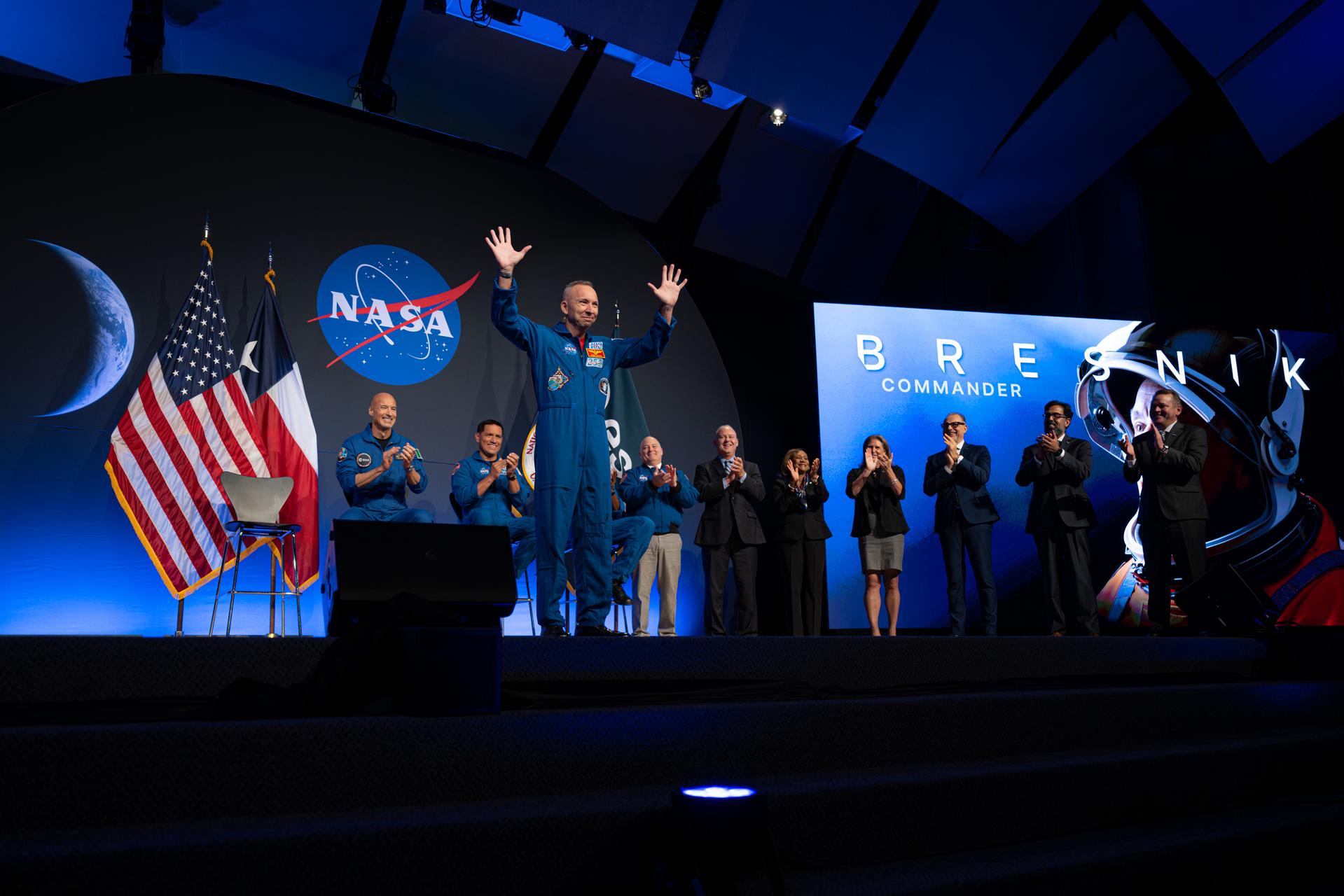
When chief astronaut Scott Tingle called a handful of astronauts into a meeting earlier this year, the agenda said it was about something else. Then Tingle told them to look around the room: they were the crew of Artemis III. For Randy “Komrade” Bresnik, the moment was a little different from his earlier assignments. On past flights the news had come to him alone. This time the whole crew learned it together, and he says he valued that. It fits his creed: take care of your people and they will take care of the mission.
NASA made it official on June 9. Bresnik, 59, will command a four-person crew with ESA’s Luca Parmitano as pilot and NASA’s Frank Rubio and Andre Douglas as mission specialists. Their flight, targeted for summer 2027, will not land on the Moon. Its job is to prove, in Earth orbit, that Orion can rendezvous and dock with the two commercial landers NASA has bought, SpaceX’s Starship and Blue Origin’s Blue Moon. What the crew learns will help NASA decide which one carries astronauts to the lunar surface on Artemis IV. The closest precedent is Apollo 9, which tested the lunar module with a crew in Earth orbit in March 1969.
A window under the flight path
Bresnik was born at Fort Knox, Kentucky, in 1967, but he calls Santa Monica, California, home. His childhood house sat under the traffic pattern of the Santa Monica airport, and he grew up watching and listening to airplanes from his bedroom window. Aviation ran in the family. His father flew in Vietnam, and his grandfather, Al Bresnik, was Amelia Earhart’s photographer.
A Marine Corps scholarship took him to The Citadel, where he earned a mathematics degree in 1989. From there the path ran through flight school, F/A-18 Hornets, the Navy Fighter Weapons School (TOPGUN) and the Marine Corps weapons and tactics course. In 2003 he flew combat missions from Kuwait during Operation Iraqi Freedom. Along the way he graduated from the U.S. Naval Test Pilot School (1999) and earned a master’s in aviation systems from the University of Tennessee Space Institute (2002). What he loved about test flying, he says, was bridging engineers and operators so pilots got safer, better airplanes. It is the instinct a test flight calls for.
Two flights, five spacewalks, one very full day
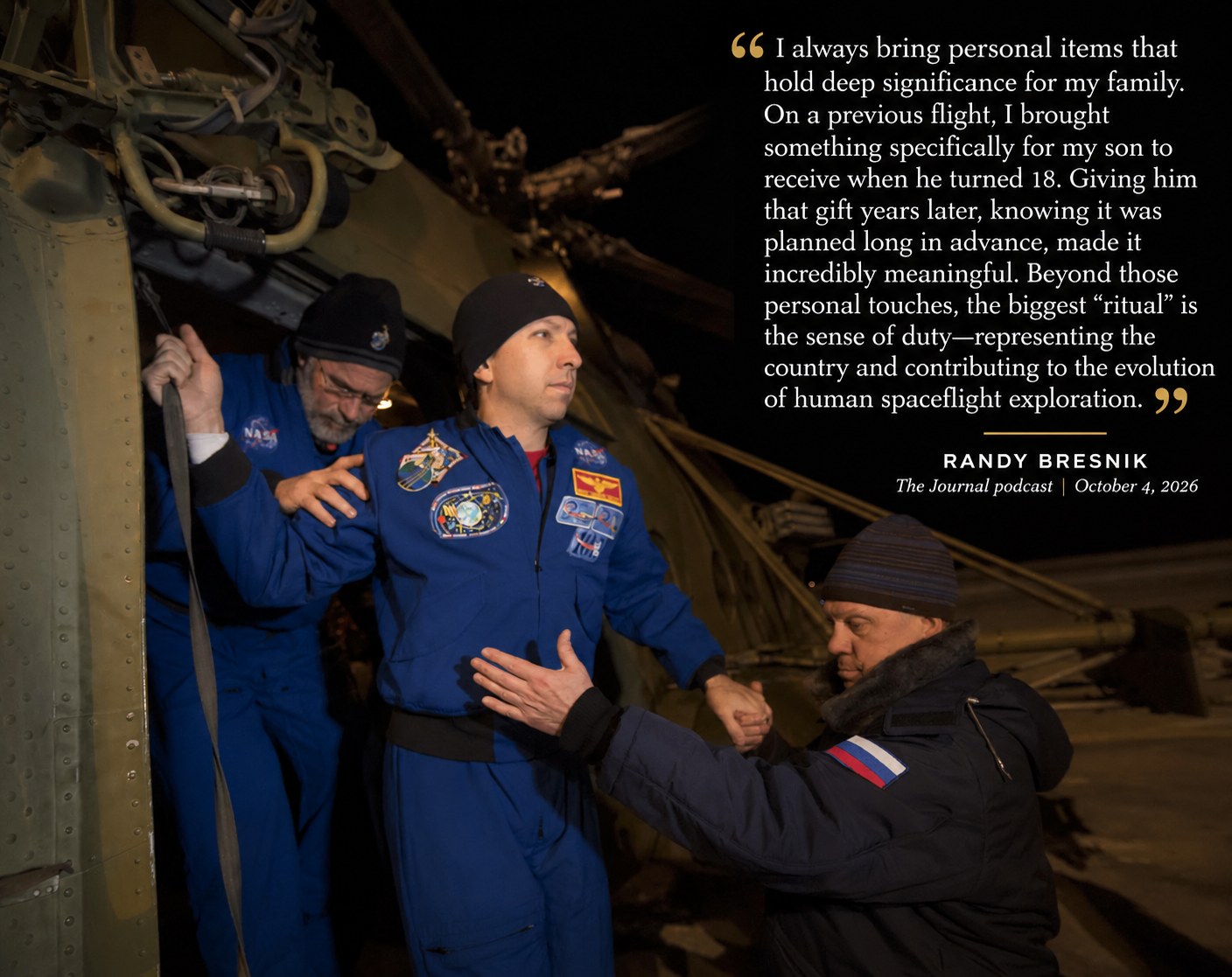
NASA selected Bresnik as an astronaut in 2004. On his first flight, STS-129 aboard Space Shuttle Atlantis in November 2009, he made two spacewalks. During the first, his wife was in labor with their daughter in a Houston hospital. Once his helmet sealed, he had no news and had to trust his training and his spacewalk partner. His daughter was born while he was in orbit.
In 2017 he launched on Soyuz MS-05, served as a flight engineer on Expedition 52 and then commanded the station on Expedition 53. He added three more spacewalks, for a career total of five and about 32 hours outside. He has also commanded the NEEMO 19 undersea mission and, by NASA’s count, logged more than 7,000 hours in 95 types of aircraft.
The man who helped build the ship
The strongest argument for Bresnik may be what he has done since 2018. As the astronaut office’s assistant for exploration, he has spent nearly eight years representing the crew’s view in the design and testing of Orion and every Artemis mission so far. He knows the spacecraft from the inside. He is also candid about where the risk lies. In his view it isn’t Orion, which he says Artemis II proved “flies very, very well.” It’s getting the two lander test articles into orbit.
At the June ceremony, Artemis II commander Reid Wiseman handed him a ceremonial baton. Bresnik said it felt more like a flaming Olympic torch, and he echoed Apollo 11’s Michael Collins: the job is to carry the fire. Artemis II flew so his crew could fly. His crew flies so Artemis IV can land.

Why him
Artemis III is a test flight, and NASA picked a test pilot to lead it. Bresnik brings command experience from the space station, crew-side expertise on Orion, a Marine’s focus on his people, and a sense of humor he says has already made them a team. He also sees the larger arc. In his words, the most important Artemis mission is always the next one.
Next in this series: Bresnik’s years as a Marine aviator and test pilot, and what they taught him about risk.
On the Record
Sources
- NASA: NASA Marches Toward Artemis III Mission in 2027, Names Crew Members (June 9, 2026)
- NASA: Randolph “Komrade” Bresnik, astronaut biography
- The Citadel Alumni Association: Col. Randolph J. Bresnik, USMC, Class of 1989
- NASA Houston We Have a Podcast, Ep. 426: Meet Artemis III
- The Space Review: Artemis 3 takes shape
- Marines.mil: The Weight of the Stars
- KPRC Click2Houston: Who is Randy Bresnik? Meet the commander of NASA’s Artemis III mission
- collectSPACE: NASA Artemis III crew announcement
- ISS Tracker: Artemis 3 commander confident crew will be ready for 2027
- Astronomy: Meet the astronauts flying on Artemis 3
Editorial status: Current through November 19, 2026.
Sourcing note: “First space shuttle veteran to fly aboard Orion,” “first crewed Orion docking” and “first crewed in-space test of company-owned lunar landers” are the publisher’s conclusions from the published crew rosters and mission plans, not claims NASA has made. None is a first until Artemis III flies.
Correction: (November 19, 2026) An earlier version said Bresnik’s crewmates credit his humor with making them a team; that was Bresnik’s own observation. It also said the commercial landers would carry astronauts on Artemis IV (NASA will choose one of the two) and described the lander risk as getting them to orbit “on time,” wording Bresnik did not use.
Editorial and AI Disclosure: This article was developed under the editorial direction of Spaceflight Firsts with generative AI assistance in drafting and editing. The publisher reviewed and approved the final article and retains responsibility for its editorial content. (Disclosure added November 19, 2026.) See our Editorial Standards & Practices.