

On the third day of Apollo 9, in March 1969, James McDivitt and Russell Schweickart crawled through the tunnel from their command module, Gumdrop, into a spacecraft that had never carried anyone. The lunar module Spider was built to land on the Moon. It never left Earth orbit. Two days later, McDivitt and Schweickart undocked and flew it more than 100 miles away from David Scott in Gumdrop, dropped its descent stage, and brought the ascent stage back to dock. It was the first crewed flight of a lunar module. Four and a half months later, Apollo 11 landed.
Artemis III, targeted for summer 2027, is built on the same logic. Its four astronauts, commander Randy Bresnik, pilot Luca Parmitano of the European Space Agency, and mission specialists Andre Douglas and Frank Rubio, will not go to the Moon. They will spend about two weeks in low Earth orbit, meeting test versions of the two landers NASA has contracted for its Moon landings: Blue Origin’s Blue Moon Mark 2 and SpaceX’s Starship.
What NASA plans
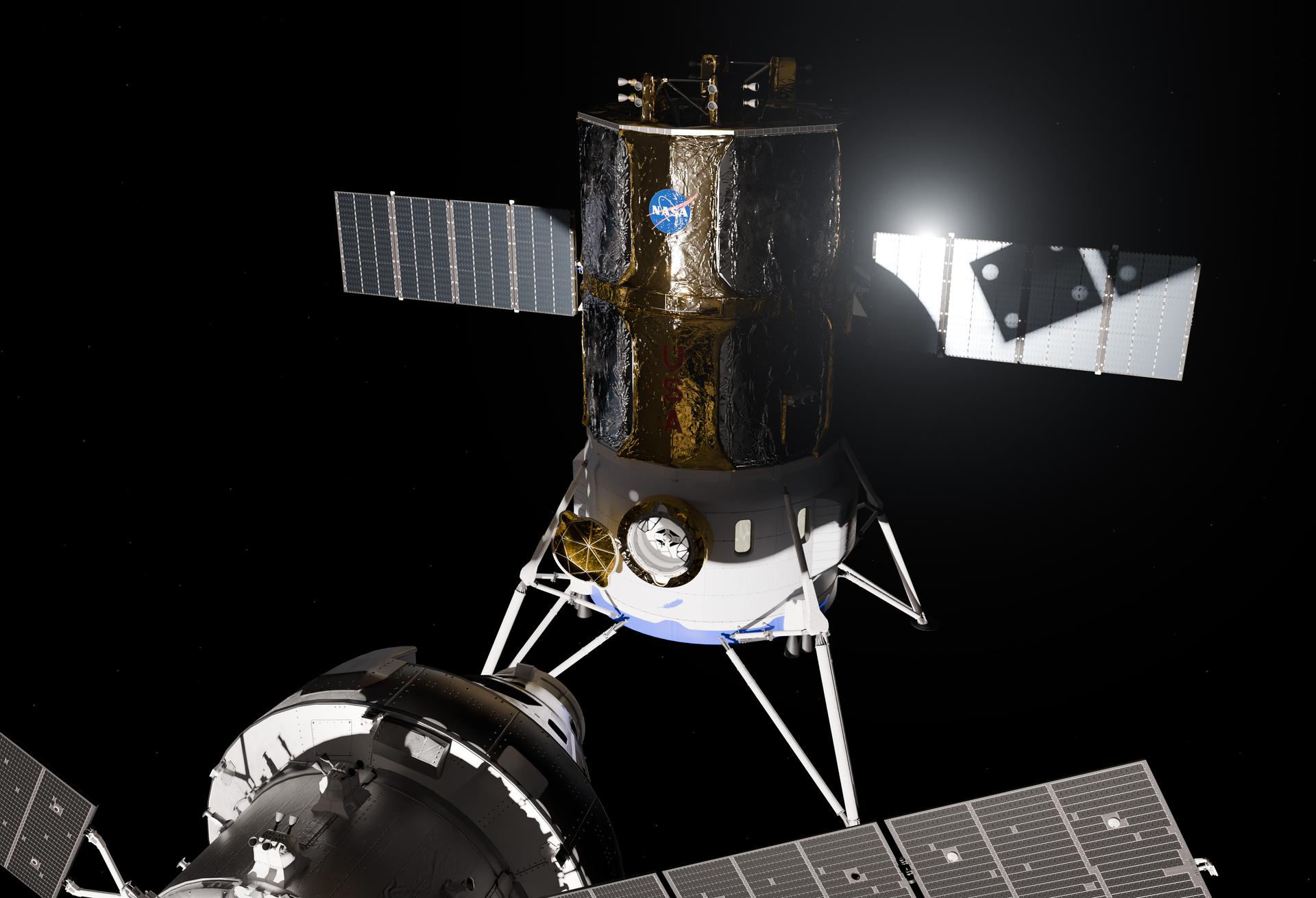
Blue Origin launches its test lander first, on a New Glenn rocket, and it waits in orbit. After the crew launches on the Space Launch System, Orion docks to the side of Blue Moon, next to its crew cabin. Up to two astronauts, wearing orange Orion crew survival suits, then plan to open the hatch and go inside to test the lander’s life support, its avionics and how the two spacecraft work together.
After Orion and Blue Moon undock, SpaceX launches its Starship test article. Orion and Starship dock nose to nose for about two hours. This Starship has docking hardware but no crew cabin, so the astronauts stay in Orion. NASA has said it will use what it learns to help decide which lander carries astronauts to the Moon on Artemis IV.
What would actually be a first
Much of Artemis III repeats things done before, and it is worth being exact about that. Apollo 9 tested a lunar lander with a crew in Earth orbit 58 years earlier. Crews boarded their lunar modules on every Apollo mission from Apollo 9 through Apollo 17. Orion docking with another spacecraft would be new for Orion, but crewed dockings have been routine since Gemini.
The Blue Moon boarding is different. Apollo’s lunar modules were built by Grumman, but NASA owned and flew them. Blue Moon and Starship are being developed by the companies themselves, which will sell NASA a landing service. If two Artemis III astronauts float into Blue Moon’s cabin, they will be the first people to board a commercially developed lunar lander in space.
It would also close a long gap. The last people inside a lunar lander in flight were Eugene Cernan and Harrison Schmitt, who flew Apollo 17’s Challenger back from the Moon’s surface to the command module in December 1972. A Blue Moon boarding in 2027 would end a break of about 55 years.
Where Artemis III differs from Apollo 9
In one way, Artemis III asks less of its landers than Apollo 9 asked of Spider. McDivitt and Schweickart flew Spider on its own engines, far from their ride home. On Artemis III, Blue Moon stays docked to Orion while the crew is aboard, and Orion’s software is planned to control both spacecraft.
In other ways it asks more. Apollo 9 launched everything on one Saturn V. Artemis III needs three heavy launches from three different rockets, two landers from two companies, and two very different docking arrangements on one mission. Both companies have had explosive accidents in the past year, including the May 28, 2026, launch pad explosion that destroyed a New Glenn rocket. Bresnik has said the hardest part is not Orion but getting the two lander test articles into orbit.
What to watch
None of this is history yet. The Blue Moon boarding is planned, not guaranteed: NASA’s own wording is “up to two” astronauts, and the plan could change as the landers mature. Spaceflight Firsts lists Artemis III on the Record as a planned entry. If the mission flies as described, we will update it and add the firsts above. If it changes, the claims will change with it.
On the Record
Sources
- NASA: Apollo 9 Mission Details
- NASA History: 50 Years Ago: Spider, Gumdrop, and Red Rover in Space
- Smithsonian National Air and Space Museum: Apollo 9
- NASA: How NASA’s Artemis III Lander Test Will Pave Way for Moon Landings
- NASA: NASA Marches Toward Artemis III Mission in 2027, Names Crew Members (June 9, 2026)
- The Planetary Society: What we know about Artemis III
- Space.com: Four astronauts, 3 spacecraft, 2 weeks in orbit
- Space.com: NASA’s ambitious Artemis 3 mission includes 3 giant rocket launches, 2 private moon landers and 1 big question
- Spaceflight Now: Artemis III crew announcement (June 9, 2026)
- ISS Tracker: Artemis 3 commander confident crew will be ready for 2027
Editorial status: Current through November 19, 2026.
Sourcing note: The three firsts in the box are the publisher’s conclusions from NASA’s published mission plan; NASA has not described them as firsts. All three are planned, not achieved, and depend on Artemis III flying as described.
Editorial and AI Disclosure: This article was developed under the editorial direction of Spaceflight Firsts with generative AI assistance in research, drafting and editing. The publisher reviewed and approved the final article and retains responsibility for its editorial content. See our Editorial Standards & Practices.